
A shelter is one of the first things you lose track of when something goes wrong, and it's easy to underestimate. Rain, wind, cold nights, and hot afternoons can wear you down faster than hunger in many situations. Even a short walk home after a storm can turn into a long night outside if you're soaked and cold.
Most people think of shelter as a big, permanent thing. In reality, the first few hours matter most. You might need to get out of wind, keep rain off your gear, or block the sun for a while until you figure out your next move. That's where short term shelter options come in. They're meant to get you through the gap, not to be your home for months.
Here are a few situations where a simple shelter makes a real difference:
- Your car breaks down on a rural road and you have to wait for help in the rain.
- A power outage or storm forces you out of a damaged building for a night or two.
- You're hiking or bugging out and the weather turns faster than your forecast said it would.
- You're helping at a shared spot where everyone needs a quick place to get out of the sun.
Heat is a real hazard here. A shelter that traps sun or blocks airflow can get very hot inside, especially in a closed tent or under a reflective cover. Set up with open vents or an open side when it's warm, and never run any heat source, like a stove or a candle, inside a fabric shelter. Fire and fumes can kill in an enclosed space, so cooking always goes outside and well away from the shelter.
The real lesson is that you don't need a perfect shelter. You need one that is quick to set up, keeps the weather off you, and is already packed where you can grab it. The best option is the one you actually have with you when things go sideways.
Quick Shelter Options You Can Set Up Fast
A plain emergency tent is one of the fastest shelters you can get up, but it still takes practice. Set it up in your yard once, on a dry day, before you ever need it in the rain.

2-Person Emergency Shelter Tent - Reflective & Waterproof
Stay Safe and Dry During Emergencies with Our 2-Person Shelter Tent
Product information
Product Review Score
4.72 out of 5 stars
(112 reviews)Product links
Start by picking the flattest, highest spot you can find. Water runs downhill, and you don't want to wake up in a puddle. Look up as you pick the spot too. Dead branches overhead can drop in wind, so move a few steps away from them.
Here are a few quick options that don't need a lot of gear or skill:
- A lean-to made from a tarp tied between two trees or a tree and a sturdy post, with one side pitched low so rain runs off the back.
- A debris shelter, where you pile leaves, branches, and brush against a long pole leaning on a support. It takes time to build, so start early in the day.
- A space blanket draped over a rope and pegged at the corners, which works as a quick windbreak or a sun shade.
- Sitting inside a vehicle with the windows cracked, if the car is safe to stay in and you're not running the engine in an enclosed area.
Watch out for the car option. Running an engine or heater in a closed garage or a snowed-in vehicle can fill the space with carbon monoxide, which you cannot see or smell. Keep the exhaust clear of snow and crack a window on the side away from the wind.
Practice matters more than the gear. Time yourself setting up a tarp or tent in the dark with a headlamp. Most people find that a five minute job in daylight takes twice as long at night with cold fingers. Keep your guy lines and stakes together in one pouch so you never hunt for them.
Tarps, Bivvies, and Emergency Tents Compared
A tarp, a bivvy, and an emergency tent all keep the weather off you, but they do it in very different ways. Your choice comes down to how much weight you can carry, how fast you need to get under cover, and how many people you're sheltering.
A tarp is the most flexible of the three. It's usually the lightest and cheapest option, and it can be strung up in dozens of shapes depending on the wind and the trees you have. The catch is that a tarp gives you no walls and no floor. Wind can blow rain in from the sides, and the ground stays wet unless you add something underneath. You'll also need cord, stakes, and some know-how to get a tight, even pitch. If you already know a few basic knots, a tarp is hard to beat for the money.
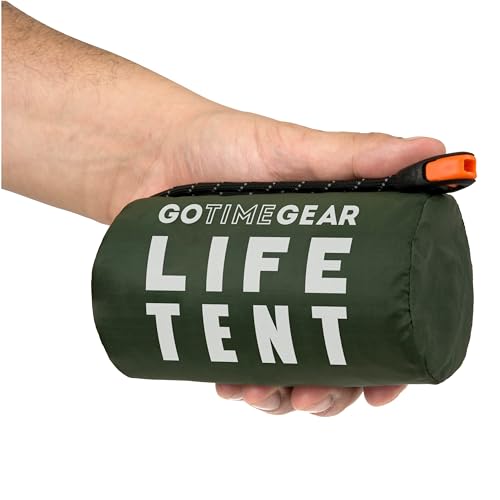
A bivvy, sometimes called a bivy sack, is a snug, single-person cover that wraps around you and your sleeping bag. It's small enough to fit in a jacket pocket on some models, and it's quick to get into because there's nothing to pitch. The trade-off is space. You'll be lying down in a tight bag, and it can feel stuffy if the weather is warm, so open the zip or the top flap when temperatures climb. Bivvies are a good pick if you want to stay low and out of the wind without much setup.
Emergency 2-Person Bivy Shelter with Accessories
Stay Protected in Any Situation with Our 2-Person Bivy Shelter and Accessories
Product information
Product Review Score
4.13 out of 5 stars
(74 reviews)Product links
An emergency tent sits in the middle. Most are built for two people, have a door, and give you room to sit up and stash a pack inside. They usually take longer to set up than a bivvy and need a bit of open ground, but they handle rain and wind far better than a tarp alone. When you're comparing them, look at how the tent closes, whether the door zips fully, and whether it comes with stakes and a carry bag. Also think about how many people you need to fit, because a tent that fits two can feel cramped with gear in it.
Here's a quick way to decide:
- Going solo and want the lightest load: a bivvy.
- Need to cover a group or a bigger pile of gear: a tent.
- Want to rig up a shelter in an odd spot or make a shade: a tarp.
- Carrying in a vehicle with plenty of room: a tent, since it's easier to live in.
One last tip: whichever you pick, test it at home before the day you need it. A tent that's easy to pitch in daylight can turn into a tangle of poles in the rain, so practice until you can do it without thinking.
Packing a Shelter Kit Before You Need It
Packing a shelter kit ahead of time is the step most people skip, and it's the one that matters most when the weather turns fast. Keep your shelter gear in one bag or bin by the door or in the trunk, so you aren't digging through the garage in the dark. A bag with a clear label works well, and a drawstring sack is fine if you're short on space.
Start with the basics and build from there. Here's a simple checklist to work from:
- One emergency shelter, either a tent or a bivy, matched to how many people you're planning for
- A tarp, plus enough cord to tie it off on two or more points
- Stakes or tent pegs, and a few spares in case you lose some on hard ground
- A small roll of duct tape for quick patches on torn fabric
- A pair of work gloves, since cold, wet fingers struggle with tent poles and knots
- A headlamp with fresh batteries, and a spare set of batteries in a zip bag
Check the kit every few months. Set a reminder on your phone for the same day you change your smoke alarm batteries, if you have that habit already. Look for mildew or a musty smell in the fabric, which can mean it got wet and never fully dried. Dry everything out before you repack it, and open the bags so the gear doesn't sit folded tight for years. Pull the stakes and count them. Check that zips still run smoothly and that cords aren't frayed at the ends.
Practice setup with the kit exactly as you packed it. Don't hunt for a missing piece in the middle of a storm. If a piece is missing, replace it now. Keep a small note inside the bag that lists what should be there, so anyone in your house can grab it and know what to check. This is also a good time to confirm that your tent or bivy is in the size you need, since a snug fit with a pack and a sleeping bag can feel very different from the box description.


